
Why I Don't Buy Gemstones in Thailand Anymore
Most family offices pursuing luxury investing think getting closer to the gemstone source means better alternative assets. Three years building relationships from Sri Lankan mines to Madagascar dealers taught me the opposite: synthetics and treatments enter precisely where high net worth investors seek handmade authenticity, compromising asset integrity.
#GemstoneInvesting #LuxuryAssets #JewelryEducation #EthicalSourcing
The first time you walk down Gem Street in Ratnapura, you're just another buyer.
They nod. They smile. But they don't take you seriously.
Not until you start asking the wrong questions. The kind that reveal you might know too much. Until you say things no outsider says.
I didn't show up with swagger. I showed up with knowledge. Four visits over three years. No shortcuts. No "friend of a friend."
Eventually, they stopped seeing me as a customer. They started nodding like brothers.
One day, a major dealer handed me an 11 carat unheated blue sapphire worth $30,000. No paperwork. No hesitation.
Take it to the gem lab. I know you'll come back.
The Trust That Opened the Furnace
That trust led me deeper.
There's a man in Ratnapura. Everyone on Gem Street knows him. But no one tells you where he works.
His furnaces are hidden deep in the forest. Beyond the last bend. Far from any accidental visitor. No signs. No address.
You're either invited or you're not.
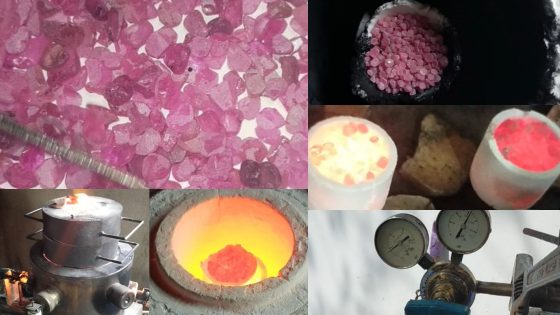
He's spent 20 years mastering heat. Not random torch work. Scientific flame geometry. Precise timing per parcel.
When the nod came (Go there, ask for him by name) I went.
No Greetings. No Small Talk. Just Heat.
The process took two days. Temperature: 2,200 degrees Celsius.
A custom gas-helium-oxygen blend. The only way to push flame that hot without destroying the gem entirely.
I quietly turned on my camera. He silently left the room.
He said: My face won't be in it. You're here alone.
What Happens in the Fire
Cloudy, low-value stones go in. Shiny, saleable stones come out.
Big brands buy them in bulk. Set them in platinum. Tuck a piece of silver foil beneath the gem to help it shine.
No one ever sees the foil. No one suspects the burn.
They'll tell you it's heat treated. But not what that means.
Not that the rutile silk (the stone's ancient fingerprint) has been melted away.
Not that zoning has been erased.
Not that the crystal structure took a thousand years to form and five hours to forget.
And Here's What Nobody Tells You About "Affordable Luxury"
The stones that go into those furnaces? Many end up in the very jewelry people brag about getting "for a steal."
That $200 sapphire ring from an online retailer. That "amazing deal" on a ruby pendant. That "direct from source" gemstone someone found on Etsy.
Same furnace. Same treatment. Same foil backing.
The difference is the story they sell you.
To a high-end buyer, it's "heat treated for enhancement." To a budget buyer, it's "natural certified gemstone, limited stock."
Both are buying cooked stones. One just paid more for the same heat.
But here's the part that should bother you: whether you spent $200 or $20,000, you still don't know what you're holding.
What Heat Destroys, Time Once Built
It's like bathing in a wild hot spring. The water flows from deep within the earth, full of mineral vitality. People travel miles for its healing balance.
But boil that same water at home, and much of its benefit disappears. What made it alive is gone.
Sapphires are the same. Their inner life, their subtle resonance, is born in pressure and time. Once reheated unnaturally, it's not just color that changes.
It's character.
And if you're the type who thinks "I'll just buy cheap and upgrade later," you're training yourself to accept garbage as normal. You'll never develop the eye to see the difference. You'll just keep buying prettier versions of the same lie.
The Same Game in Madagascar
I saw the same pattern far from Sri Lanka. In Antsirabe, Madagascar.
There's a quiet corner of town where miners gather to sell their finds. I bought rough ruby there. Sat with them. Spoke eye-to-eye.
Anything I declined, I watched disappear across the street.
Eventually I asked: Who are they selling to over there?
A woman replied plainly: That's the final stop. Nigerians buy everything, by the kilo. Low prices. No questions.
They ship it to Chantaburi for bulk heat treatment. After that, the stones pass through Silom Road in Bangkok. Polished. Reclassified. Sold to overseas buyers under lights and glass.
The chain is global. The illusion is uniform.
Some of those stones end up in five-figure investment pieces. Some end up in $50 fashion jewelry.
Same treatment. Different markup. Same deception.
The Industry's Chemical Toolbox
Even some Sri Lankan traders send rough or heavily included stones to Chantaburi. There, decades of expertise have built a refined arsenal of treatments:
-
Beryllium diffusion
-
Glass-filling
-
Chemical enhancements
-
And more
These methods can dramatically transform stones, often beyond what simple heat treatment achieves.
It's an industry reality. Widely understood among insiders. Seldom fully disclosed to end buyers.
Once stones reach the polished markets around Silom Road, they often carry a story crafted as much by chemistry as by nature.
That's why I don't buy gemstones in Thailand anymore. My focus remains on raw, traceable stones sourced with integrity. Stones that tell their true story.
Two Types of Buyers. Same Problem.
Here's what I've learned dealing with both ends of the market:
The High Net Worth Investor knows what they want. They're willing to pay. But when you're putting $50,000, $100,000, or more into a single stone, the fear of being cheated becomes very real.
A colleague who specializes in gemstones once told me: "Investors don't really want you around to buy the stones for them. They want assurance. A nod here and there that what they're buying is worth the money they're paying."
He was right. At that level, confidence is more valuable than the stone itself.
The Budget Buyer thinks they're being smart. "Why pay more when I can get the same thing cheaper?"
Except you're not getting the same thing.
You're getting what's left after the real buyers have passed. You're getting the stones that needed the most help. The most treatment. The most deception.
And worse, you're conditioning yourself to accept mediocrity. You'll never learn to see quality because you've never held it.
You think you're saving money. You're actually just buying expensive trash on a payment plan.
But Trust Takes Time
The story didn't stop in that furnace room.
Outside, in the open, I was fighting a quieter battle.
Gem dealers mocked my cutting style at first. They thought I was crazy to abandon standard weight saving cuts.
They asked: Why throw away value?
Because I saw what they couldn't yet see: True sparkle comes from geometry, not carats.
I sat for days with one of the region's top cutters. We wasted cheap parcels dialing in angles. Light paths. Crown depths.
We pushed until he saw it. And when he did, we switched to the real stones.
When those first cuts were finished, I handed them to the same dealers who'd laughed.
They held them up to the light and stopped talking.
Weeks later, I heard: You can mention his name. Ask for the special cut. We know.
That's how real trust is earned.
Not with charm. Not with money. With conviction carried out over time.
And that's why I source raw. Unheated. And why my stones are cut to ignite, not to survive a weight scale.
The Closer You Get to the Source, the Trickier It Becomes
Most think the trick is to get closer to the mine. Buy direct. Cut out the middlemen.
They'll say it like they've discovered a secret.
What they don't see is what I saw in Madagascar and Sri Lanka. As you move closer to the source, the game changes.
The parcels get heavier. The prices get lighter. And the synthetics slip in (quietly, beautifully, deliberately) because you think you're ahead.
This is where both the serious investor and the bargain hunter make the same mistake: they think proximity equals authenticity.
It doesn't.
On the street, I learned things they don't teach:
-
How to see a synthetic with the naked eye
-
How to read a cloudy rough before it's even cleaned
-
How to trace a gem's behavior in the hand, not just in a lab
So no, I don't chase mines.
I build relationships.
Four Pathways. Different Budgets. Same Standard.
Over time, I shaped four clear pathways for people at different stages:
For the serious investor who understands that when six figures are on the line, expertise isn't an expense, it's insurance. Field access exists because the cost of a mistake is too high.
For the committed buyer who's ready to stop playing in the shallow end. Who wants to learn what quality actually feels like. Who understands that one real stone teaches you more than ten fake ones.
For the skeptic who thinks they know better but keeps getting burned. Who's starting to realize that "cheap" has cost them more in the long run than one good piece would have.
For the curious who just wants to understand what they're actually looking at when they walk into a jewelry store. Who wants to stop being the easiest mark in the room.
You don't need to be wealthy to care about truth.
But you do need to stop pretending that cheap and valuable are the same thing.
The Reality: Smart investment strategy rewards expertise over proximity. Whether you're investing $500 or $500,000, asset integrity comes from understanding what you're buying, not chasing shortcuts or settling for "good enough."
When your money is on the line, can you afford to trust the story you're being sold?
Personal sourcing experience. Investment decisions require proper due diligence.